


The right vase comes from its relationship with the space it inhabits
Choosing a vase for the living room isn't just about finding a pleasant color or shape. The vase must be proportionate to the furniture it sits on, interact with the existing materials, and play a specific role in the overall composition.
A vase can become the focal point of a sideboard, complete a group of objects on a coffee table, or stand alone as a small sculptural presence. Before choosing one, it's therefore helpful to consider three elements: its position, its dimensions, and its relationship with its surroundings.
In this guide:

Start from where it will be placed
Choosing a vase should begin with considering where it will be placed. A sideboard, a small table, a shelf, or a niche all have different proportions, viewpoints, and functions: the same object might look balanced in one space and almost invisible in another.
On a long sideboard, the vase can become the focal point of the composition or be placed alongside books, a lamp, or a small work of art. On a coffee table, it's preferable to choose shapes that aren't too tall, capable of being viewed from multiple sides without interrupting the relationship between people. On a bookshelf or a shelf, however, the vase must interact with the dimensions of the compartments and the nearby objects, avoiding completely filling the available space.
A floor-standing vase requires a greater presence and must be proportionate to both the wall and the surrounding furnishings. Before purchasing, it is therefore useful to observe not only the surface it will sit on, but the entire volume that the object will occupy.

Proportions matter more than absolute figures
There is no single correct size. A vase must be evaluated in relation to the width of the furniture, the height of the room, and the other elements present in the composition.
A very small object, placed alone in the center of a wide credenza, risks appearing random and lacking impact. Conversely, a vase that is too large can weigh down the furniture and reduce the space needed for other objects. When the vase is the protagonist, it must have a sufficient presence to be perceived even from a distance. When it is part of a composition, it can be smaller, provided it contributes to creating a variation in heights and volumes.
As a general guideline, small or medium vases often work well on shelves and bookcases; on credenzas and consoles, more substantial objects can be used; for the floor, tall and visually stable shapes are needed. However, the measurements must always be checked in the real context.
A simple method is to mark the footprint of the vase on the furniture with masking tape or to create a cardboard cutout of the intended height. This allows you to evaluate the proportion even before placing the object in the space.

Form alters the perception of space
The shape of a vase is not merely an aesthetic feature. It can accentuate verticality, soften a very geometric environment, create movement, or introduce a sculptural presence.
To choose, it's helpful to observe the predominant lines of the room and decide whether to complement them or create intentional contrast.
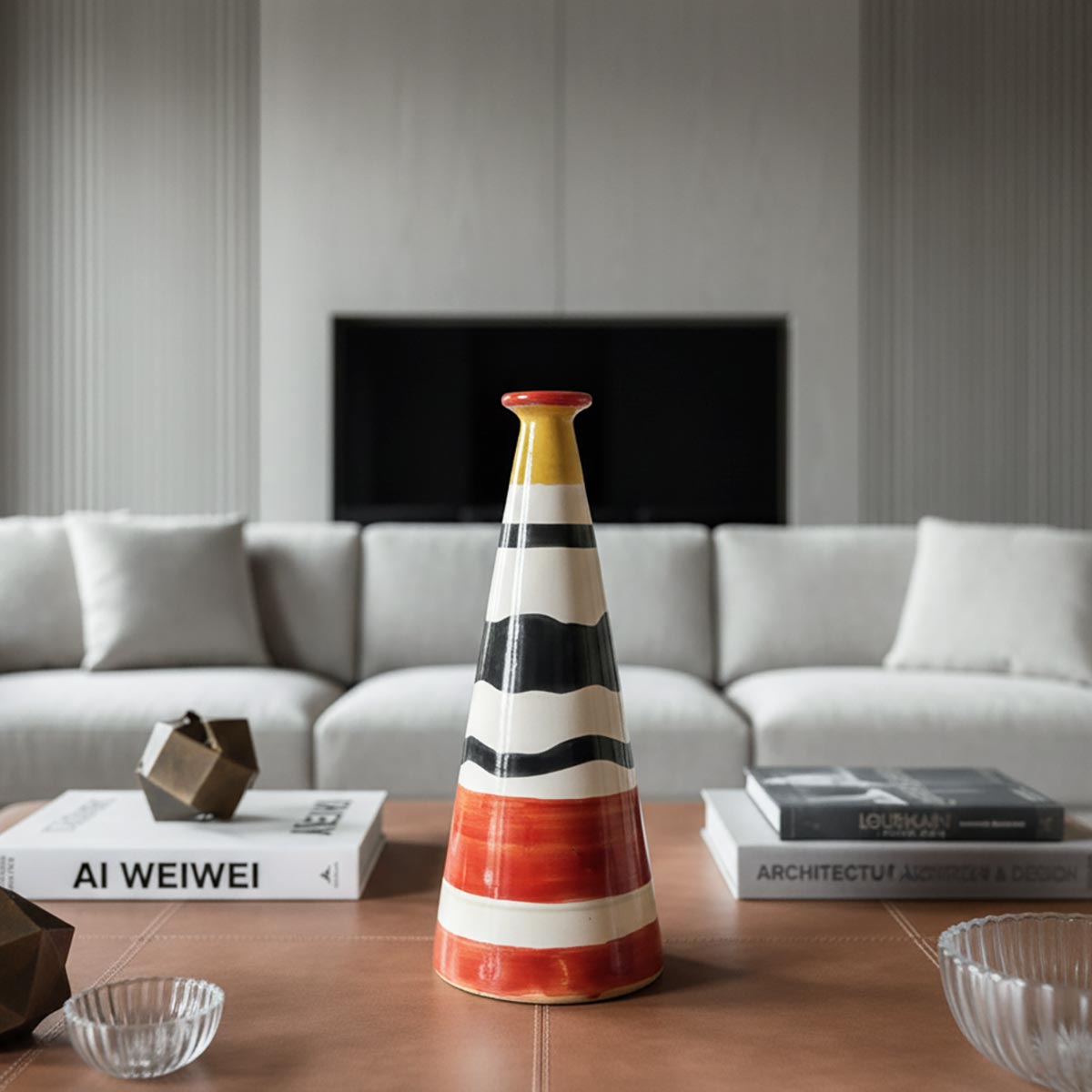
Slender shapes
Tall and narrow vases introduce a vertical line and are particularly effective on long, low furniture. They can rebalance a sideboard, flank a painting, or enhance a corner with limited horizontal space. If used with flowers or branches, it is important to also consider the overall height of the arrangement.
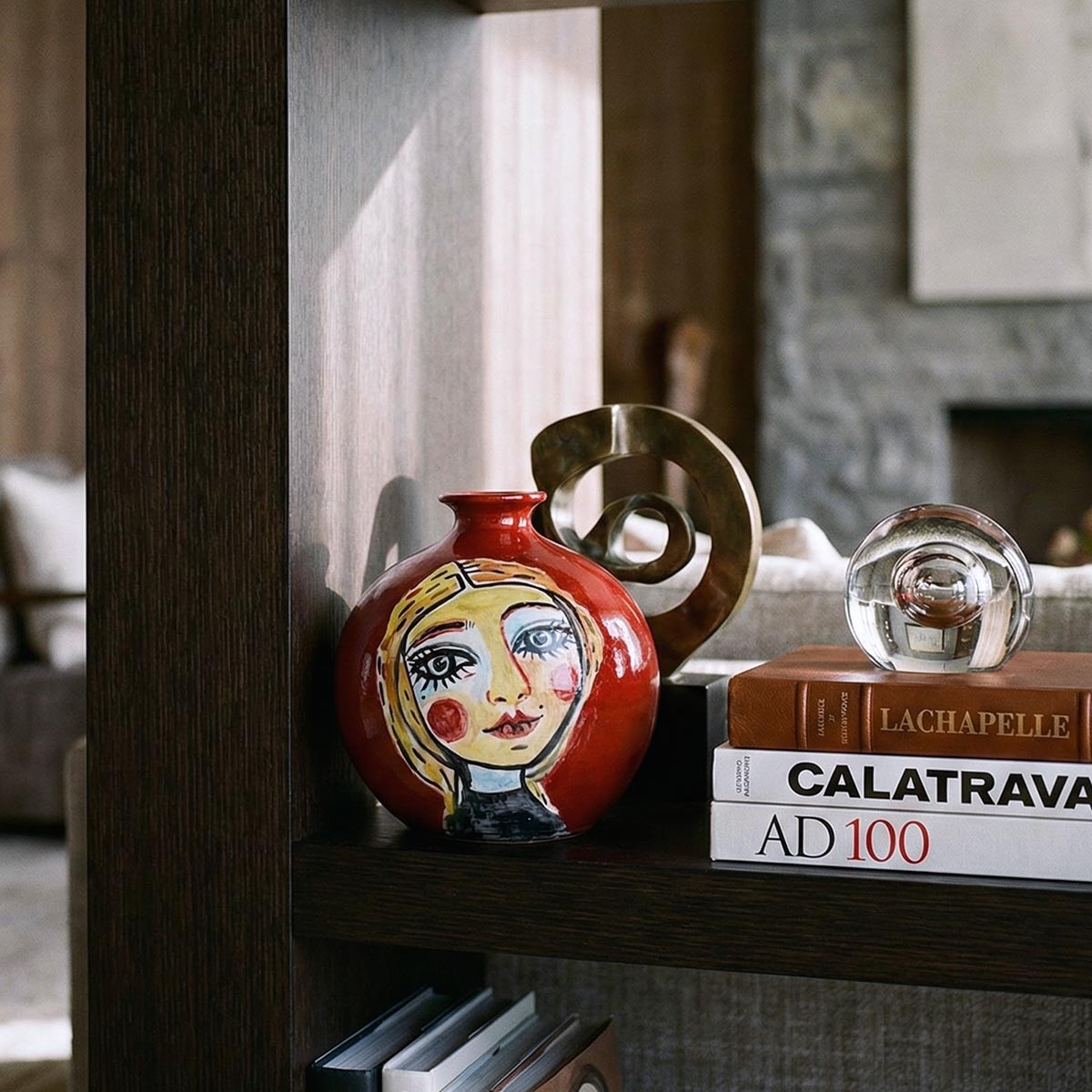
Round and organic shapes
Soft shapes help to make interiors with straight lines, smooth surfaces and geometric furnishings more welcoming. They work well on coffee tables, consoles and shelves, especially when placed next to books or more angular objects.
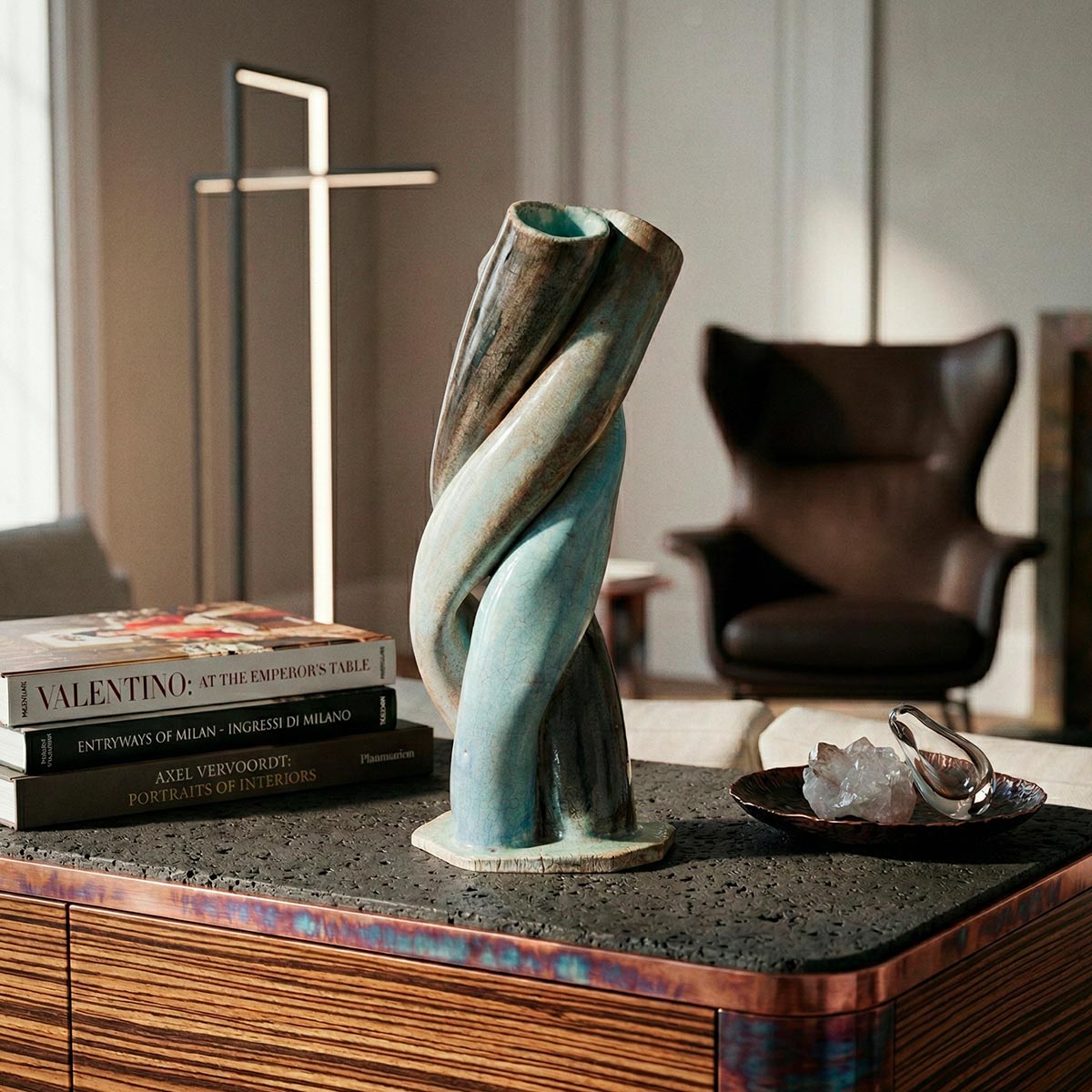
Sculptural vases
A sculptural vase doesn't need to hold flowers to be complete. Its form, material, and the way it reacts to light allow it to exist as a small work of art. It is the ideal choice when you want to create a focal point without adding many elements.
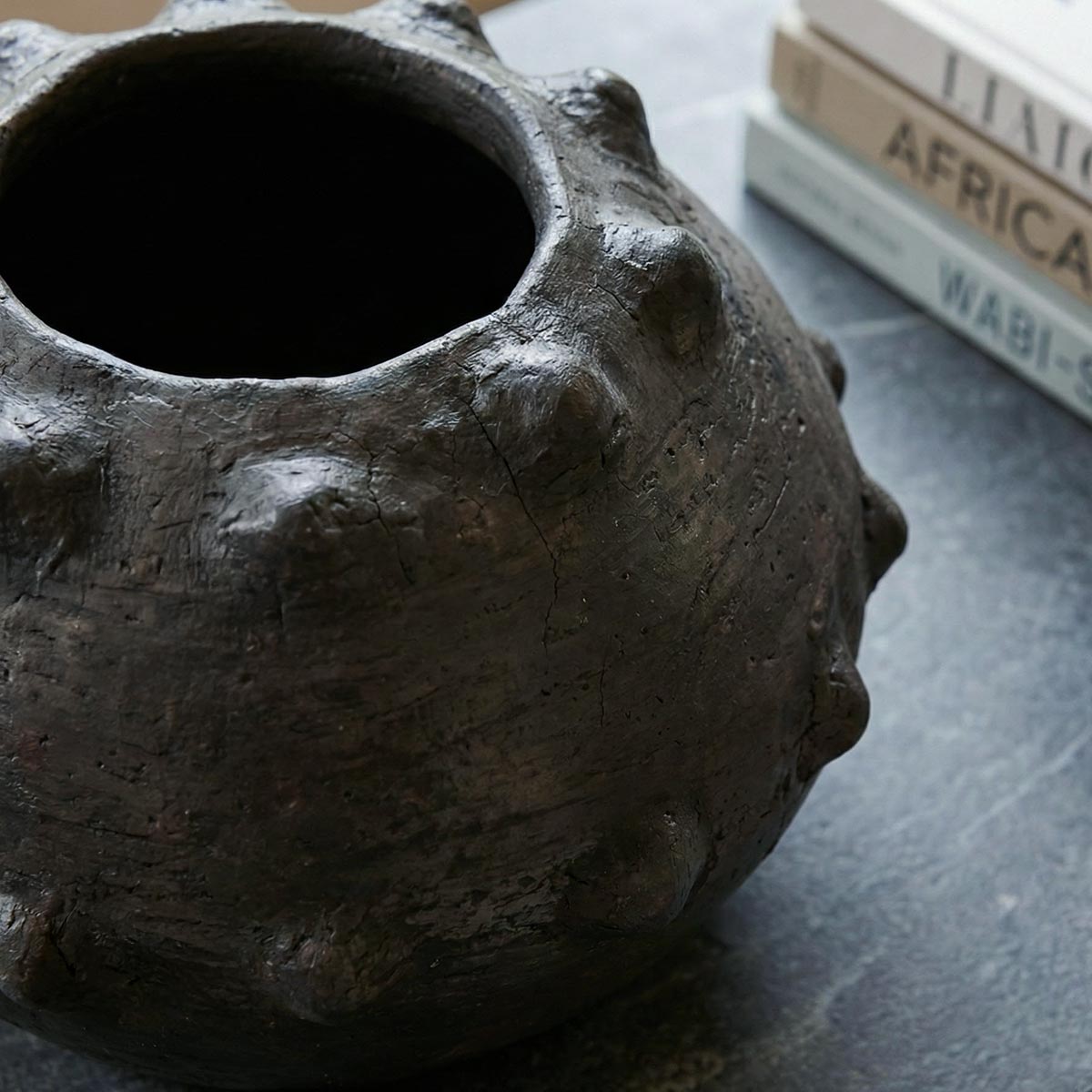
Low and wide shapes
Low vases are well suited to coffee tables, deep shelves, and arrangements viewed from multiple directions. They don’t interrupt the view and can be used to balance taller items, creating a less predictable sequence of volumes.

Match the pot or create a contrast
The color of a pot can complement the room's palette or interrupt it with a bolder accent. The choice depends on the role you want to assign to the object: a discreet presence, a connecting element, or a focal point.
The color does not have to be identical to that of the furnishings. It is often more interesting to echo a shade already present in a painting, a fabric, a rug, or an architectural detail.
Color continuity
A vase chosen from the same color family as the room creates a harmonious and understated result. Natural tones, ivory, earth, sand, and textured grays are particularly suitable when you want to highlight the shape and surface without introducing a strong contrast.
Controlled Contrast
A different color can energize a composition, provided it finds at least one point of connection with the environment. A blue vase can dialogue with a work of art, a red object with a textile detail, a green ceramic with the presence of plants or natural materials.
Color as a focal point
In a neutral space, a brightly colored vase can become the visual focal point of the room. In this case, it is preferable to leave space around the object, avoiding placing too many equally strong elements next to it. Contrast works when it is intentional, not when it arises from accumulation.
The finish also alters the perception of color. A glossy surface reflects light and appears more intense; a matte or textured surface, on the other hand, produces a deeper and more discreet effect.

A protagonist or a set of forms
A single vase is often sufficient when it has a significant shape, a particularly expressive surface, or dimensions appropriate to the space. Placed with enough breathing room, it can become an autonomous presence and transform even a very simple surface.
Compositions, on the other hand, are useful when you want to create a rhythm made of different heights, materials, and volumes. The most natural result is achieved by avoiding objects that are too similar to each other. Two or three elements are generally sufficient: a taller vase, a more compact one, and a low element, such as a bowl, a book, or a small sculpture.
Objects should not be arranged in a line or perfectly equidistant. A slight visual overlap makes the group more spontaneous and allows it to be perceived as a single composition. It is equally important to leave part of the surface free: the empty space separates the elements, makes their shapes legible, and prevents the ensemble from appearing crowded.
Different materials can coexist, provided they share at least one relationship: a common color, finish, origin, or character.
A balanced composition does not depend on the number of objects, but on the relationship between heights, volumes, and empty space.

When a vase becomes a sculptural presence
Not all vases necessarily need to contain flowers. Many contemporary objects are designed to be observed as autonomous forms, where material, color, and artisanal craftsmanship take center stage.
A vase without flowers leaves its profile completely visible and allows light to highlight its surfaces, irregularities, and chromatic variations. This is a particularly effective choice for hand-molded ceramics, asymmetrical shapes, and objects with very narrow or intentionally non-functional openings.
On a sideboard, a vase can be placed alongside a small work of art or a stack of books. On a bookshelf, it can break the sequence of volumes and introduce a more free form. On a console table or in a niche, it can stand alone, especially when its silhouette is sufficiently recognizable.
Using a vase as a sculptural object also allows its composition to remain stable over time, without depending on the presence of fresh flowers. The important thing is to give it a precise position and not treat it as a simple filler.
To discover how an object born from everyday use can become a decorative presence, read the Botijos from Spain story. Also, discover the material strength of Malles ceramics from Sejnane.
Mistakes to avoid when choosing a vase
Choosing too small a pot
A small vase can get lost on a very long sideboard or in front of a wide wall. If the object appears isolated and lacks presence, it can be placed alongside books, artworks, or other elements, or replaced with a more significant shape.
Completely fill the worktop
Adding many objects does not enrich the composition. When every part of the furniture is occupied, the shapes lose legibility and the whole appears cluttered. Empty space is an element of the composition and must be designed with the same care as the objects.
Use objects all of the same height
A uniform sequence creates a static effect. Alternating tall, medium, and short elements, on the other hand, creates movement and allows the eye to travel through the composition. Even a few centimeters of difference can change the overall balance.
Matching too many colors without a relationship
Different colors can coexist, but they should be linked by a palette, a material, or a specific intention. When each object introduces an independent hue, the result risks appearing random and incoherent.
Choose the vase based solely on the flowers
Flowers change, while the vase remains. It is therefore important to evaluate the object even when it is empty, observing its shape, proportions, and ability to interact with the space. A good vase must maintain its presence even without content.
Ignore the different points of view
A vase placed on a central coffee table is observed from multiple directions, while an object on a sideboard is seen mostly from the front. The choice must also consider the back, the profile, and how the shape changes as one moves around the room.
Vases chosen to add character to the living room
Sculptural forms, textured surfaces, and colors that interact with space. A selection of handcrafted vases designed to be enjoyed with or without flowers and to transform sideboards, coffee tables, shelves, and corners of the home.
To compare shapes, sizes, and finishes, explore the handcrafted ceramic vases selected by Vicode.

Designer's tip
Before choosing a vase, observe the empty space it will occupy. Do not only consider the width of the furniture, but also the height of the wall, the direction of the light, and the presence of nearby objects.
Try to imagine the composition from multiple points in the room. A well-chosen vase does not simply fill a space: it introduces a new proportion, creates a rhythm, and changes the way we perceive the environment.
When in doubt between two sizes, ask yourself which of the two can maintain an autonomous presence without dominating the rest. Balance is almost always found in the relationship between the object and the empty space that surrounds it.
Lorenzo Lazzeroni
Interior and Product Designer · Art director Vicode

Keep exploring
Delve into the relationship between objects, matter, and space through the Vicode Guides dedicated to ceramics, art, and interior design.
Discover all Vicode insights dedicated to choosing objects and composing spaces.
A journey to discover materials, techniques, surfaces and processes that make artisanal ceramics unique.
Compositional principles for enhancing sideboards, shelves, consoles, coffee tables and alcoves through objects, books and artworks.
Discover Vicode's selection of handcrafted vases, sculptural ceramics, and decorative objects chosen to give character to interiors.

