


An Ancient Object, A New Perspective
The botijo is part of Spanish material culture. It originated as a water container, intended for daily use in homes, fields, workplaces, and everyday settings.
Its strength lies in its simplicity: a clay form, a body capable of holding, a spout for drinking, a precise gesture. Yet, it is precisely this essentiality that makes it a surprisingly contemporary object today.
Vicode views botijos not as souvenirs or nostalgic objects, but as forms capable of inhabiting contemporary interiors. Their decorative presence arises from the encounter between popular memory, Mediterranean ceramics, color, proportion, and space.
In this story:
From the original function of the botijo to its contemporary decorative use, a journey through clay, water, popular forms, color, and the curatorial eye of Vicode.

What is a botijo
The botijo is a traditional Spanish container, usually made of porous clay, designed to store water and dispense it through a small spout.
Its shape is immediately recognizable: a full body, an upper handle, a mouth for filling, and a spout for drinking. In Spain, it can take on different variations depending on the area, workshops, and local traditions.
Even before being a decorative object, the botijo was an object of use. Its beauty stems from this direct relationship with its function: to contain, refresh, and offer water.

Water, clay, and natural cooling
The botijo is not just a container; it's a small, natural cooling system. The porosity of the clay allows a tiny amount of water to filter outwards; upon contact with the air, this moisture evaporates and helps to lower the temperature of the water inside.
It's a simple and intelligent principle, linked to the Mediterranean climate and a daily use of materials. Before refrigerators, objects like the botijo met a concrete need through an empirical understanding of materials.
A significant part of its charm lies in this relationship between water, clay, air, and time.

From everyday gesture to decorative object
Over time, many objects created for daily use have taken on new value. When their original function is no longer needed, their form remains: the body, the spout, the handle, the memory of the gesture.
The botijo thus enters contemporary interiors as a decorative object, but without losing its origins. It is not a form invented for decoration: it is a form that has lived, that has contained water, that belongs to a specific material culture.
For Vicode, this transition is fundamental. A botijo is not only interesting for its aesthetics, but for its ability to bring a simple, popular, and authentic story into a space.
Shapes, colors, and surfaces
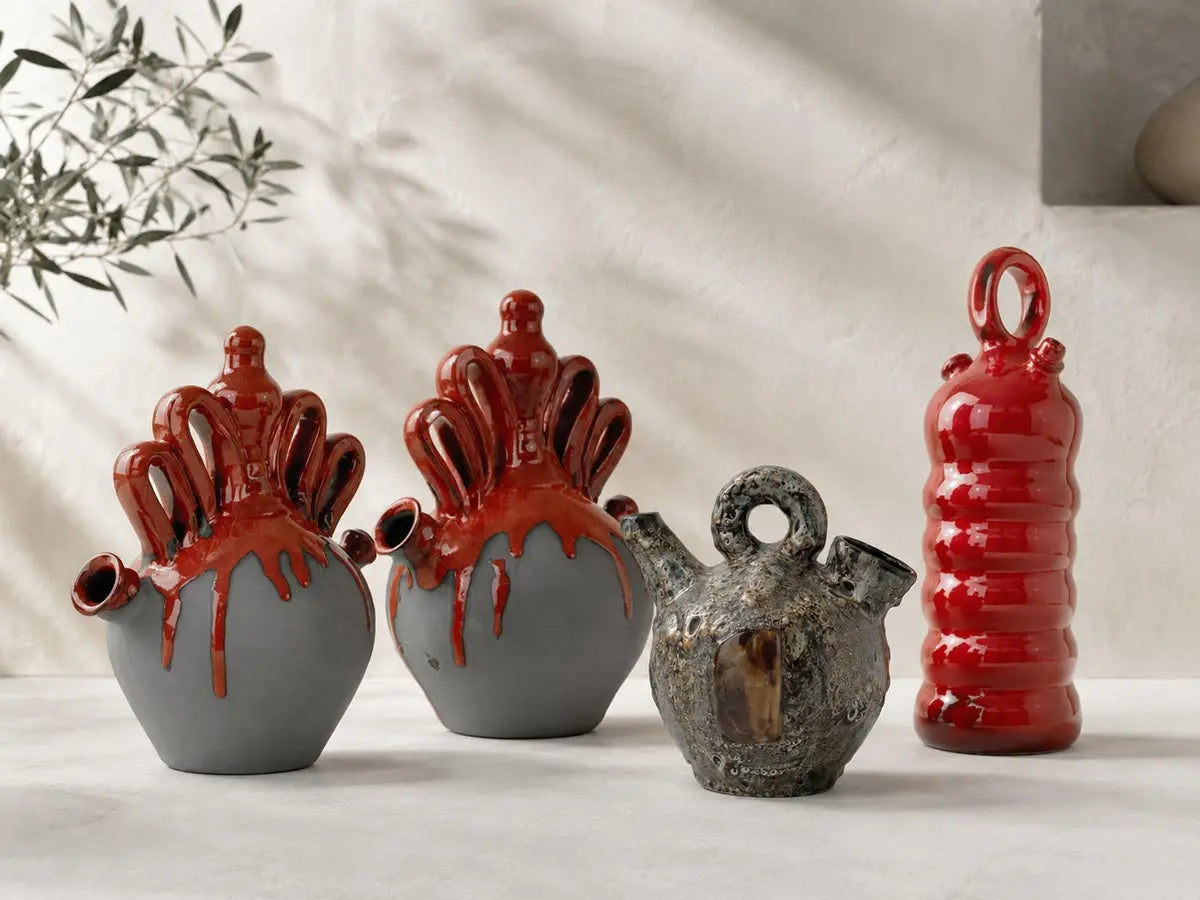
Popular forms
Full bodies, handles, spouts, and filling mouths create a recognizable and immediate silhouette.
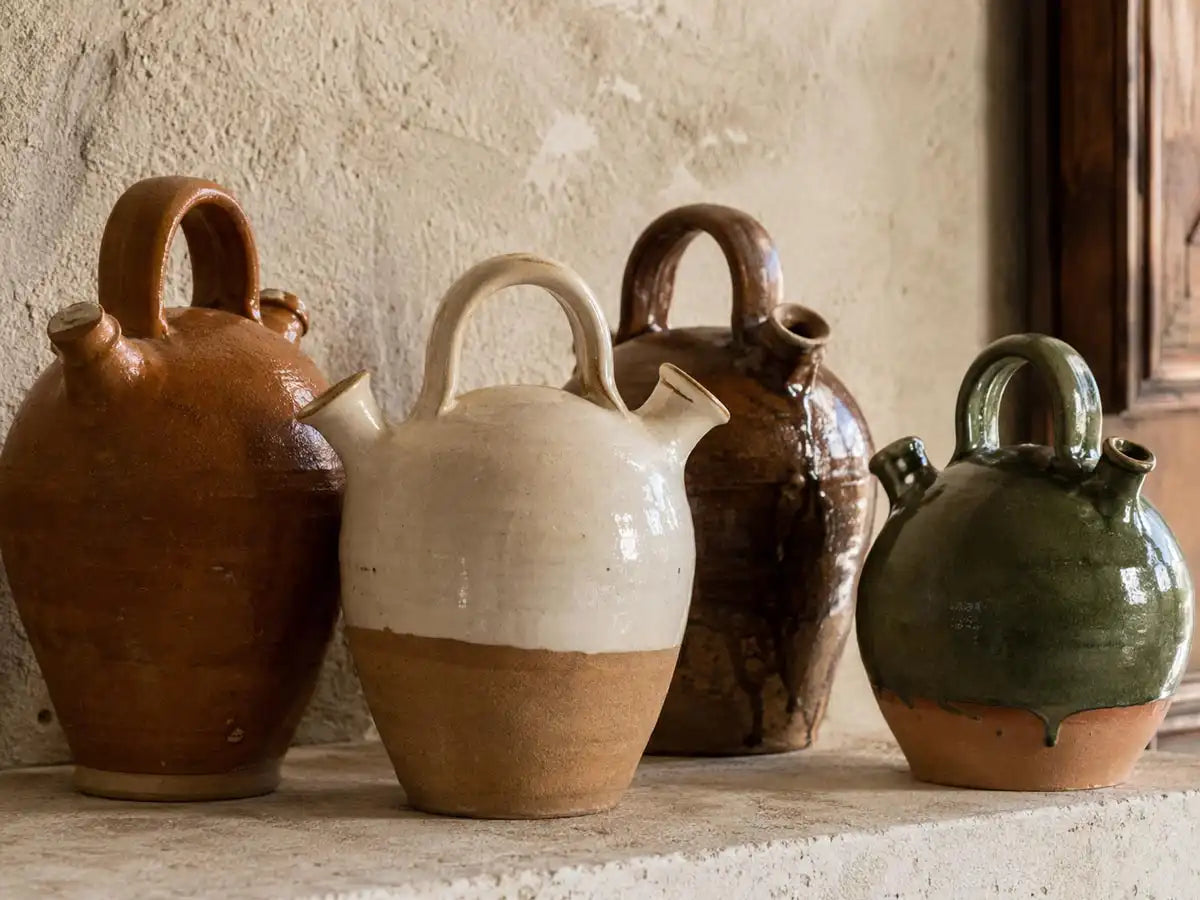
Mediterranean colors
Earthenware, enamels, greens, browns, ochres, and natural tones transform the object into a chromatic presence.
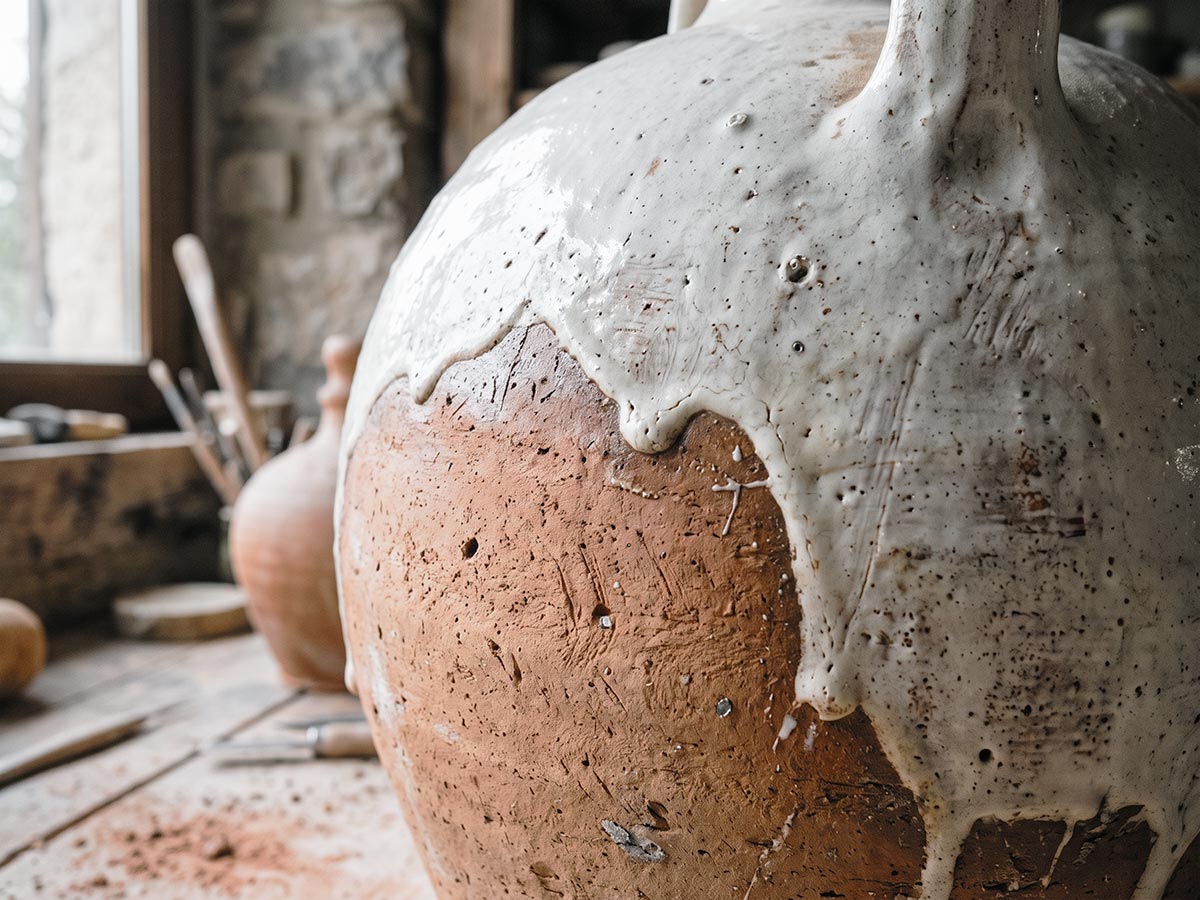
Surfaces and matter
Porosity, glaze, small imperfections, and handmade marks give depth to the object.

Vicode Discovered in Spain
Botijos entered the Vicode world through travel and research. In Spain, amidst shops, ceramics, markets, and places explored with curiosity, we encountered these objects as familiar and unexpected presences at the same time.
We were struck by their ability to be both simple and iconic. Objects born for an everyday function, yet capable of taking on a new decorative value when viewed with a contemporary eye.
We chose them because they tell a different story of the Mediterranean from the usual one: not easy decor, but the material, the gesture, the colour, and the memory of a popular object.
Discover the Pasión Botijos selection

How to use a botijo in contemporary interiors
A botijo can exist in contemporary interiors as a sculptural vase, a standalone object, or part of a composition. Its full, recognizable form makes it suitable for sideboards, shelves, alcoves, bookshelves, and coffee tables.
In a minimalist setting, it introduces a warm, Mediterranean memory. Alongside art books and natural surfaces, it becomes a cultured, non-nostalgic object. In a composition with ceramics, paintings, or small textural objects, it creates a balance between ancient function and current decorative use.
The secret is to give it space: the botijo works when its silhouette, its voids, its spouts, and its material can be appreciated.
Spanish botijos selected for their shape, color, material, and ability to transform an everyday object into a decorative presence for contemporary interiors.


Frequently Asked Questions
What is a botijo?
A botijo is a traditional Spanish container, usually made of porous clay, designed to store water and allow it to be drunk through a small spout.
What was the botijo used for?
Traditionally, the botijo was used to hold and keep water cool. The porosity of the clay promotes the evaporation of a small amount of water on the outer surface, contributing to natural cooling.
Can a botijo be used as a decorative item?
Yes. Today, the botijo can be valued as a decorative object, especially in contemporary interiors where its popular and material form creates an interesting contrast with essential furnishings, books, artworks, and natural surfaces.
Where to place a botijo in the house?
A botijo can be placed on a side table, a shelf, a bookcase, in a niche, or on a coffee table. It works well as a standalone object or in dialogue with other ceramics, art books, and natural materials.
Why did Vicode choose botijos?
Because they combine ancient function, iconic shape, Mediterranean memory, and contemporary decorative value. They are simple yet powerful objects, capable of telling the story of a place and a material culture through ceramics.

Keep exploring
All stories dedicated to materials, journeys, artists, projects and events that define the Vicode vision.
The story of Sejnane pottery, encompassing material, memory, female craftsmanship, and contemporary interiors.
A guide to understanding ceramic materials, surfaces, glazes, imperfections and artisanal value.
Compositional principles for enhancing sideboards, shelves, console tables, coffee tables, and niches through objects, books, and artworks.

