


Vicode Research Journal
The Soul of Objects
Three places, three encounters, and three objects that illustrate how part of the Vicode selection comes to life.
Some objects are chosen after weeks of research. Others appear when we are looking for something entirely different. In both cases, before entering our catalog, they must be able to stop us: for an unusual shape, a material marked by time, or a story worth preserving.
This happened in Valencia, in the souk of Marrakech, and during an encounter with some works from Volterra. Three different episodes that explain better than any manifesto what we mean when we talk about objects with a soul.
We are not looking for absolute perfection. We look for objects capable of keeping visible a gesture, an origin, and the character of those who made or preserved them.
First encounter · Valencia
The unexpected red of a botijo
We had entered a small wine bar in the center of Valencia. On the counter were bottles, glasses, and objects collected over time. In a display case, among more traditional forms, a red botijo stood out for its intense color and almost sculptural silhouette.
The botijo originated as a popular container for keeping water cool. The one we had in front of us, however, seemed to have moved away from its sole functional use: the glossy red transformed an everyday object into a presence capable of defining a corner of the house all by itself.
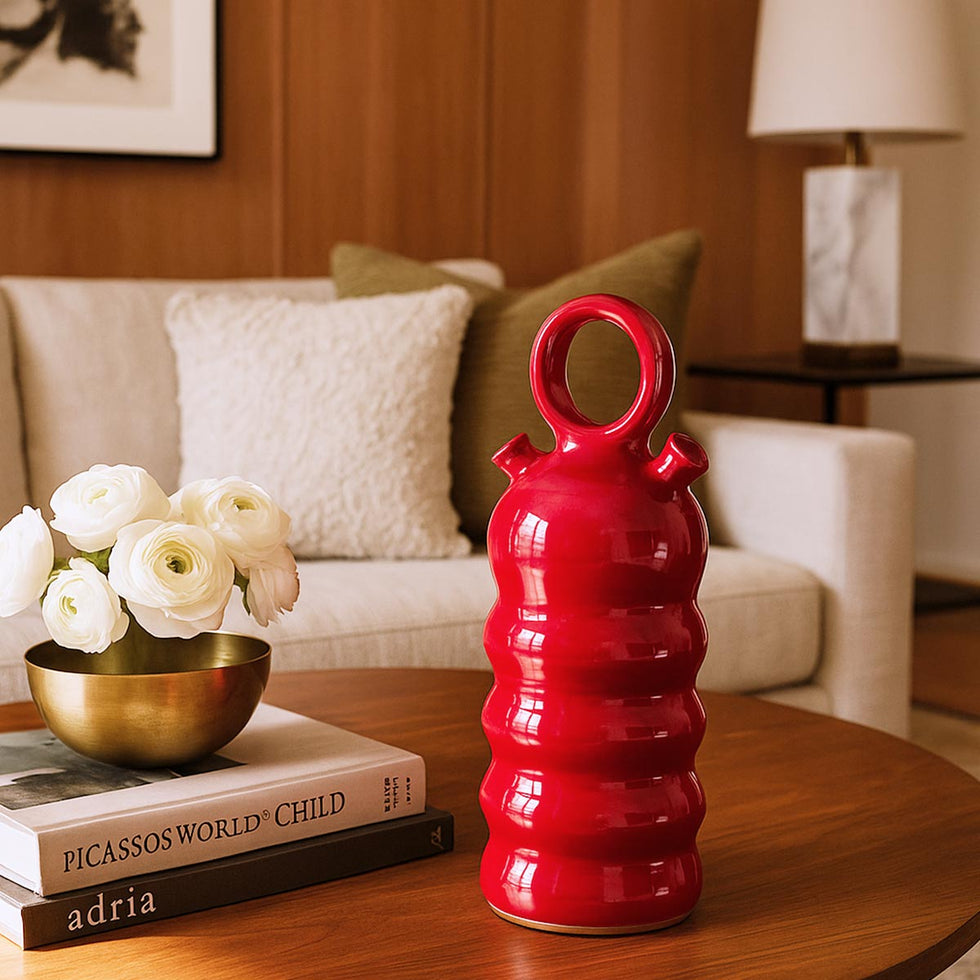
We brought it with us because it contained two qualities we often seek: an immediately recognizable form and the ability to surprise without resorting to excess.
Its story continues in our selection of artisanal and designer vases . To learn about the context in which we discovered it, you can also read our journal from Valencia .
Second encounter · Marrakech
A wooden fish found while looking for fossils
In Marrakech, we were looking for small fossils for our son. His passion for dinosaurs had led us through shops, stalls, and warehouses where very different objects coexisted without apparent order.
It was there that we noticed some carved wooden fish. They had essential shapes, worn colors, and intentionally irregular details. We did not know the name of who made them or the path that led them to that stall. It was evident, however, that they were not mass-produced.
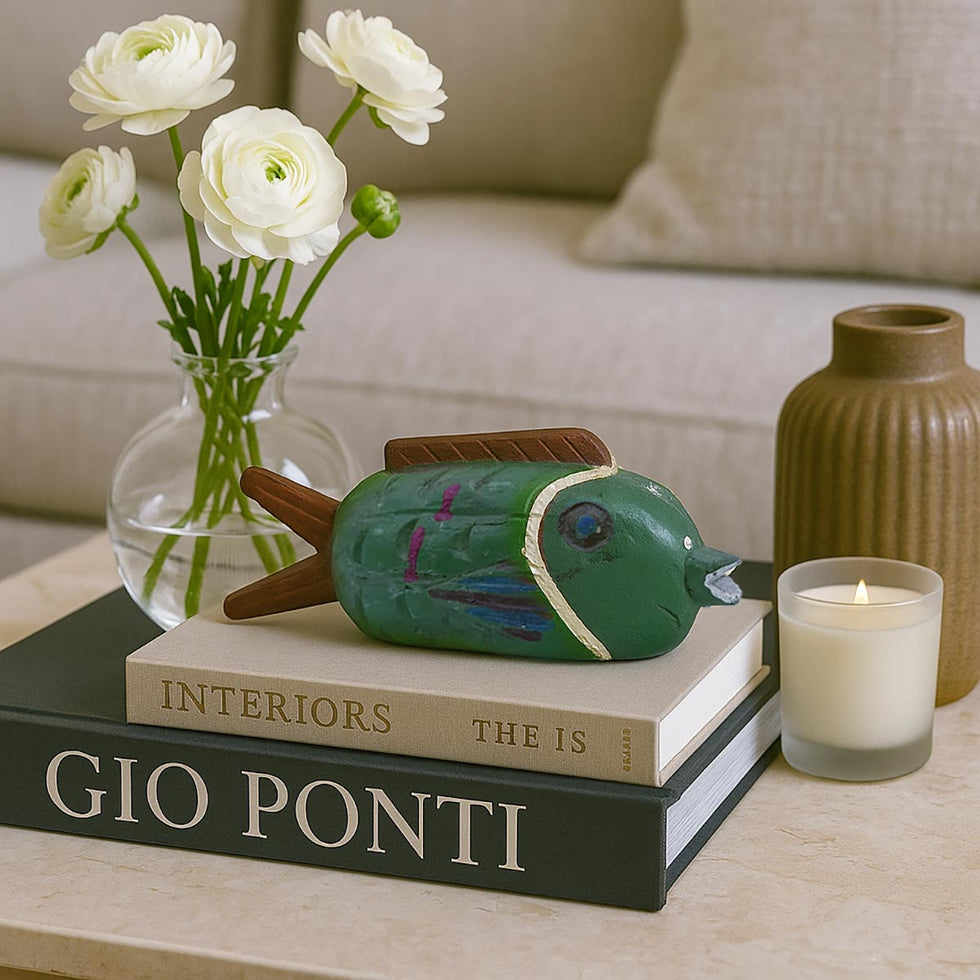
Memory Fish #3
The surface shows visible incisions, chromatic variations, and traces of manual work. It is a decorative object, yet it retains something of its popular and everyday origin.
We imagine it on a bookshelf, next to a ceramic piece, or integrated into a composition of small objects collected during different journeys.
That search reminded us that selection doesn't always happen in places dedicated to design. Sometimes it originates in a market, during a conversation, or by following a detour that seemed to have nothing to do with our work.
In the story dedicated to Marrakech and its craftsmanship we collected other places, impressions, and objects encountered during that trip.
Third encounter · Volterra
When a work continues to ask questions
The relationship with a work of art is different. It is not enough for a painting to complete a wall: it must continue to generate thoughts even after one's gaze has moved elsewhere.
This is what we felt in front of Shadows of the Mind, a work signed R’95 and created during a period spent in a facility in Volterra. The painting is direct, restless, and free from complacency. It does not try to be reassuring, and for this very reason, it leaves a lasting impression.
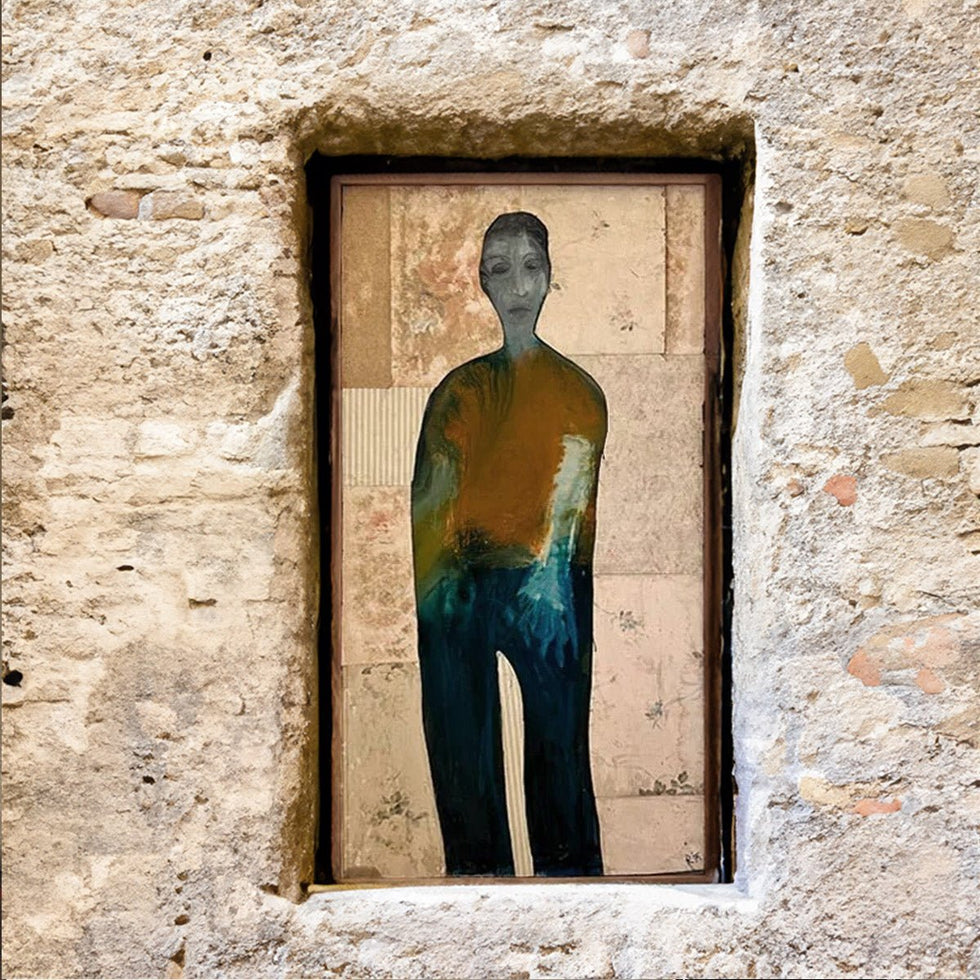
We do not know every answer contained in the work and we do not try to attribute a single meaning to it. We are interested in its ability to keep a dialogue open: with the person who painted it, with the place it comes from, and with the person who chooses to live with it.
This is also the criterion that guides the selection of Vicode paintings and artworks : not merely decorative fillers, but presences that can alter the perception of a space.
What we really look for in an object
These three episodes do not constitute a rule, but they illustrate some of the criteria we use when selecting a new piece.
A recognizable presence
The form must be able to maintain character even without being placed in a complex arrangement.
A material that does not hide the process
Small irregularities, manual marks, and surface variations are often what make a piece authentic and unique.
A verifiable or openly told story
When we know the author, the workshop, or the place of discovery, we tell their story. When some details remain unknown, we prefer to state this without constructing artificial legends.
Each object thus enters a broader narrative, made up of people, territories, and different ways of working with materials. Its final destination, however, is not decided by us: it begins in the home and life of whoever chooses it.

