


Matter as a Memory of the Journey
La Bisbal d’Empordà is one of those places where ceramics are not simply an artisanal product, but part of the landscape, culture, and daily life.
During our trip to Catalonia, we encountered objects that told a familiar yet new story: simple forms, deep glazes, Mediterranean colours, imperfect surfaces, and a natural ability to inhabit contemporary interiors.
Vicode chose these ceramics for their dual soul: rooted in popular tradition, yet able to interact with current homes, bookshelves, sideboards, tables, and arrangements with a discreet, warm, and tactile presence.
In this story:
From the Catalan ceramic tradition to the Vicode selection, a journey through workshops, glazes, Mediterranean colours and new ways of experiencing objects.

La Bisbal d’Empordà, Pottery City
La Bisbal d’Empordà, in Catalonia, is a place deeply connected to ceramics. Here, production not only belongs to memory but continues to define the visual and cultural identity of the city.
The ancient chimneys, workshops, laboratories, and the Terracotta Museum tell the story of a region where ceramics have been one of the most recognizable activities for centuries. Utilitarian objects, tableware, containers, tiles, and decorative pieces have, over time, created an immediately recognizable material language.
For Vicode, La Bisbal was a natural discovery: a place where tradition doesn't seem static, but still capable of generating living objects.

A tradition of workshops, bakeries and glazes
La Bisbal ceramics are born from a deep connection between earth, fire, color, and everyday use. It is a tradition built over time by artisans, factories, workshops, and studios capable of transforming raw materials into functional and decorative objects.
Glazes are an essential part of this language: they protect, color, reflect light, and make each surface unique. The value lies not in absolute perfection, but in the vibration of the hand, the subtle chromatic variation, the depth of the material.
It is a ceramic that preserves memory, but does not remain trapped in the past.
Mediterranean colours and glazed surfaces
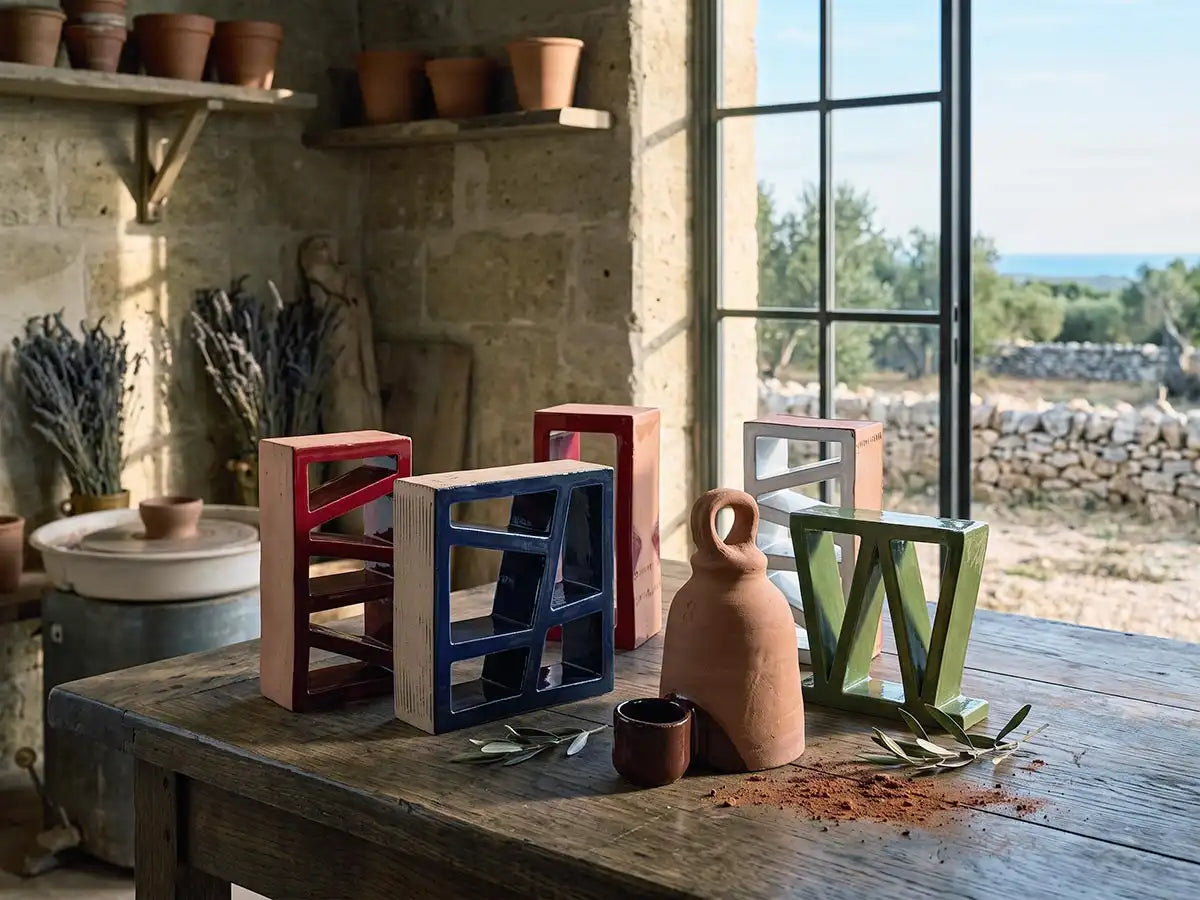
Earth and clay
The material base remains visible: terracotta, warm browns, and surfaces that retain the memory of the earth.
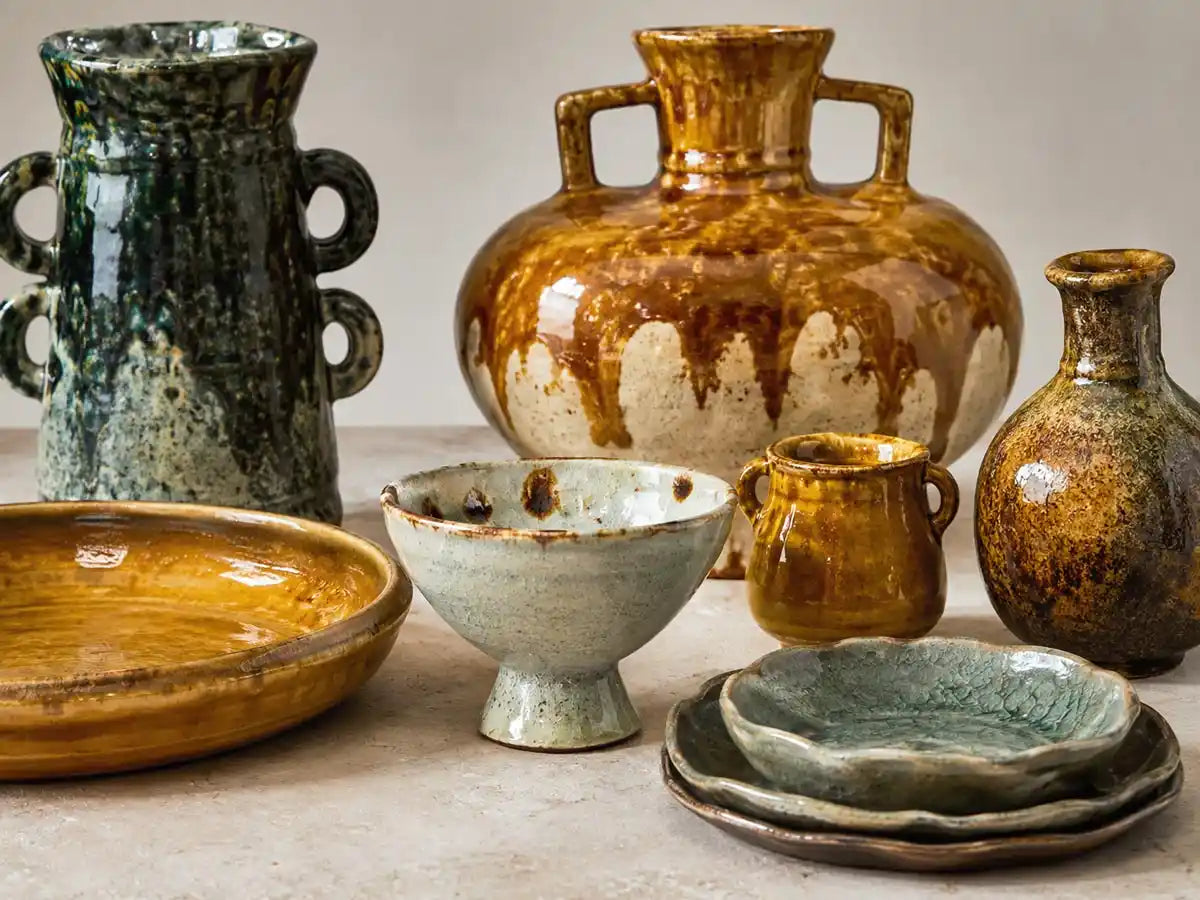
Green and brown glazes
Greens, browns, ochres and honey tones recall Mediterranean landscapes, natural surfaces and warm light.
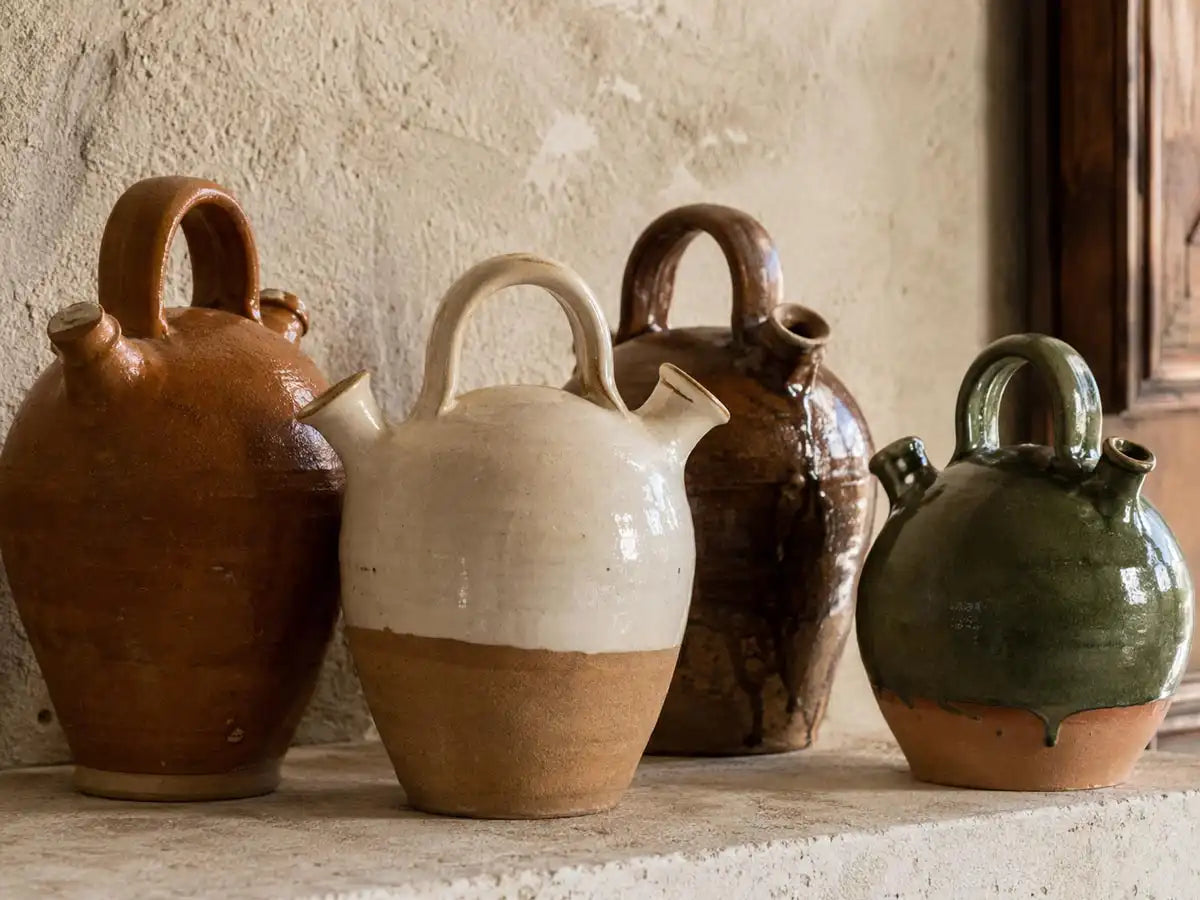
Living surfaces
Small variations, reflections and imperfections make each object unique, closer to the hand that created it.

The Vicode Discovery in Catalonia
Our research in La Bisbal d’Empordà began with a journey, as is often the case for Vicode. We weren't just looking for objects to add to our catalog, but for pieces that could tell the story of a place and naturally fit into our vision.
Among workshops, boutiques, and ceramics arranged like fragments of a Mediterranean memory, we recognized objects that spoke Vicode's language: authentic materials, subdued colors, simple shapes, and a natural ability to blend with contemporary interiors.
We chose them because they are not generic decorative ceramics. They carry the character of a city, a tradition, and a journey.

From Utilitarian Object to Contemporary Decoration
Many Mediterranean ceramics originate from a simple function: to hold, serve, protect, and accompany daily life. But when these objects enter a contemporary home, their function transforms.
A container, a bowl, a vase, or a small glazed form can become decorative presences, splashes of color, textural breaks, or compositional elements.
For Vicode, value arises precisely from this transition: the object does not lose its origin but gains a new possibility. It is not emptied of its memory; it is observed with a different gaze.
The forms born from this tradition dialogue with our selection of ceramic design vases.

How to incorporate these ceramics into your interiors
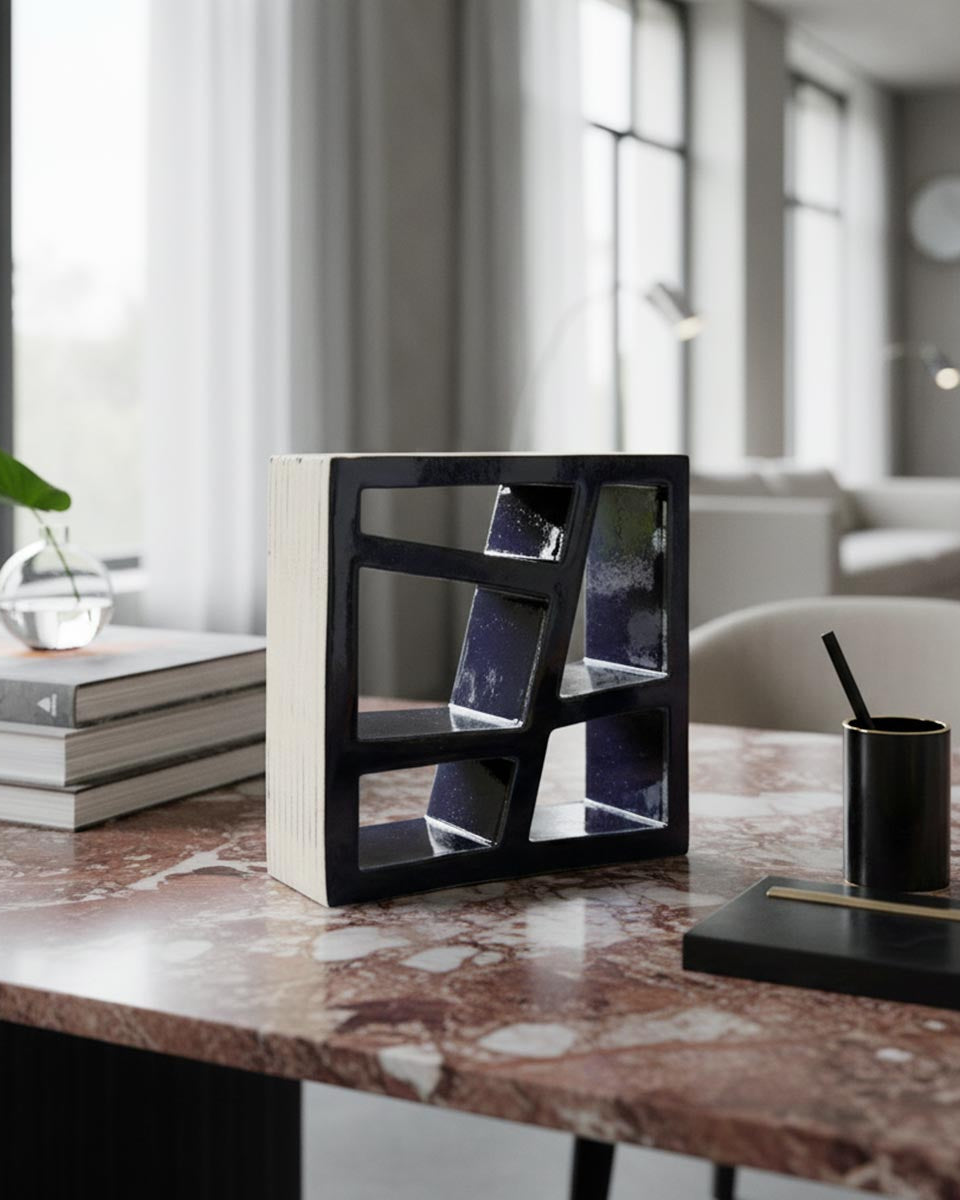
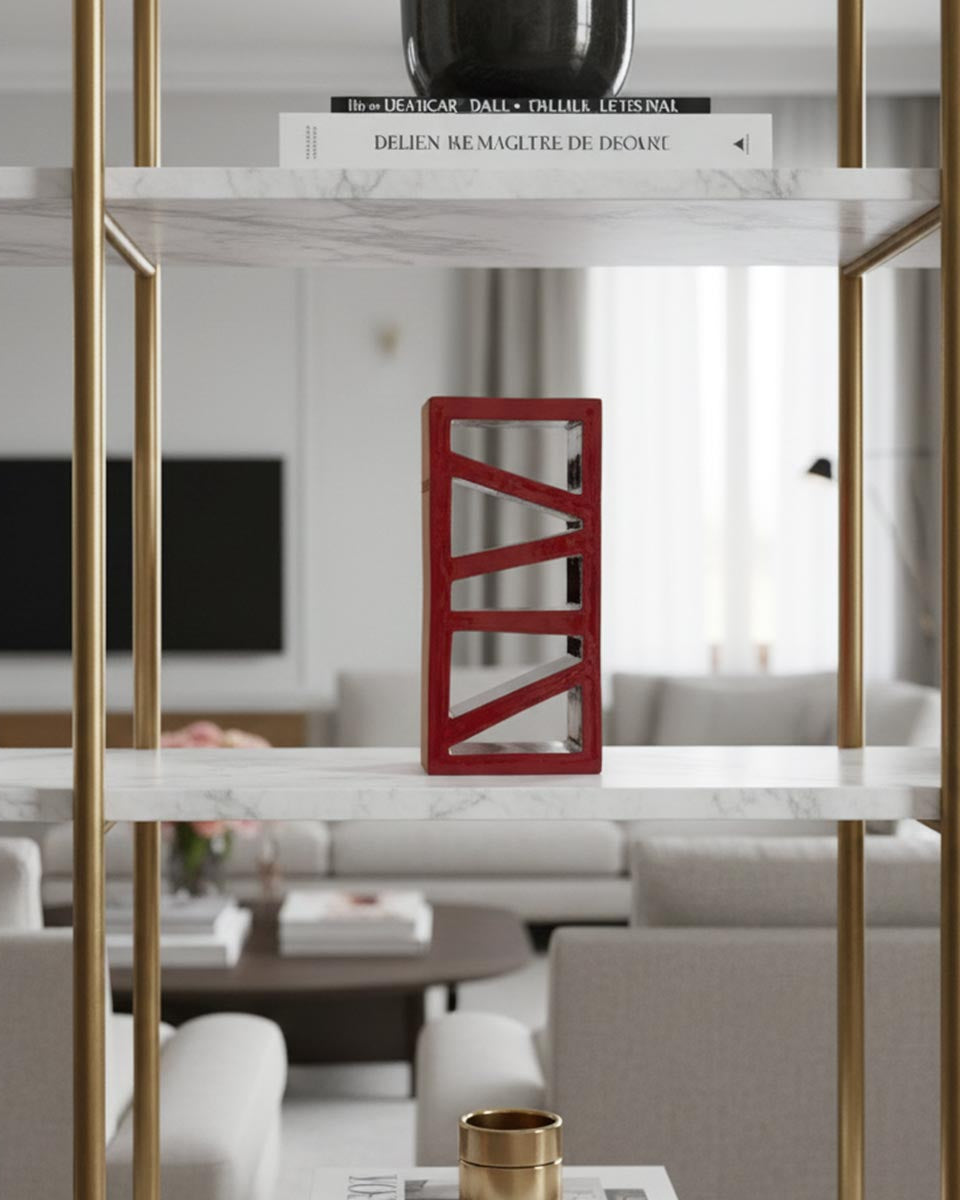
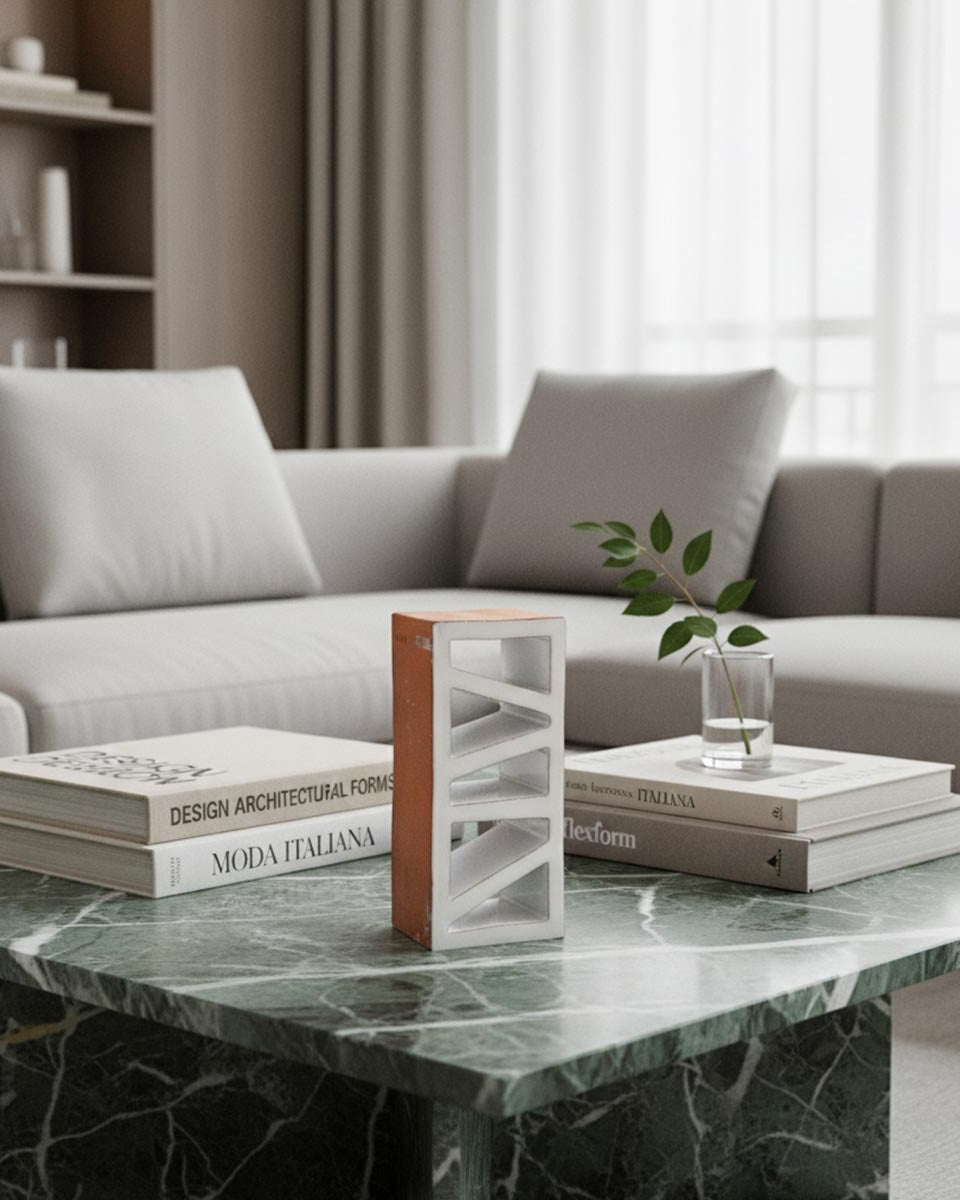
The ceramics from La Bisbal d’Empordà work well in contemporary interiors because they introduce colour and texture without becoming overbearing. They can stand alone as small accents, or create richer compositions alongside books, paintings, vases, and textured objects.
On a sideboard, they add chromatic depth. In a bookcase, they break the rhythm of books with a glazed presence. On a coffee table or console, they can create a discreet focal point, especially when paired with natural materials such as wood, stone, linen, and burnished metals.
The secret is not to treat them as souvenirs, but as compositional elements: objects with a history, a surface, and a proportion.
To learn more about the relationship between objects, sideboards and composition, read the guide Space Decoration.
Ceramics chosen for their color, material, glaze, and ability to bring an authentic, elegant, and contemporary Mediterranean presence to interiors.

Frequently Asked Questions
Where is La Bisbal d'Empordà located?
La Bisbal d’Empordà is located in Catalonia, in the province of Girona, and is known for its long ceramics tradition and for the presence of workshops, studios, and museums dedicated to ceramics.
Why is La Bisbal d'Empordà associated with ceramics?
For centuries, ceramics has been one of the city's most representative activities. This tradition has left visible traces in the urban landscape, in the old factories, kilns, workshops and the Terracotta Museum.
What kind of ceramics did Vicode select?
Vicode has selected Mediterranean ceramics that combine color, glaze, material, and formal simplicity. Objects that retain their artisan origins but can integrate into contemporary interiors.
Are these ceramics just for decoration?
Some ceramics originate from everyday use, while others have a more decorative purpose. In both cases, Vicode selects them for their ability to become material and chromatic presences in the home.
How to incorporate Mediterranean ceramics into your home?
It can be placed on a sideboard, a shelf, a bookcase, a console table or a coffee table. It works well next to art books, natural surfaces, artworks and materials such as wood, stone, linen and burnished metals.

Keep exploring
All stories about materials, travels, artists, projects and events that define the Vicode vision.
From traditional water container to contemporary decorative object, between popular memory and Mediterranean material.
A guide to understanding ceramic materials, surfaces, glazes, irregularities, and craftsmanship.
Compositional principles for enhancing sideboards, shelves, console tables, coffee tables, and niches through objects, books, and artworks.

